The SUZUKI Car Company (Maruti Suzuki that is) has largely been credited for having brought in an automobile revolution to India. What started as a small scale joint venture with Maruti is now India’s largest car manufacturing company for some innumerable years and at the moment they appear to be invincible!
But unfortunately their counterpart Suzuki Motorcycle company never really enjoyed that much success in India. There was a time when their business looked all set and rocking, and then there were times when it was in a major crisis. And finally they had to pack off their bags and quit unceremoniously only to come back few years later.
WHERE THERE IS RISE, THERE IS A FALL
Well that seems to be the exact case in the 17 year old joint venture between TVS and Suzuki. In 1984, Suzuki came together with TVS for the production of 100 cc motorcycles under the name of Ind-Suzuki.

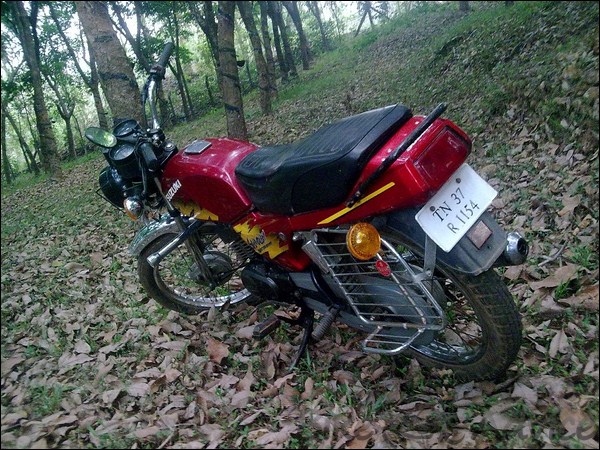
Subsequently the moped division was bought by Ind Suzuki Motorcycles in 1987 and the company changed its name to TVS Suzuki Ltd. Suzuki was to provide technical assistance to TVS. Even though TVS had a wide range of products including mopeds, scooters and motorcycles, collaboration with Suzuki was for Motorcycles only. Soon sales started to pick up and the models were an instant hit. The Max-100 motorcycles were very successful and known for their reliability, so much that these motorcycles formed a base for further development of products for the company.
From 1990 to 2000s
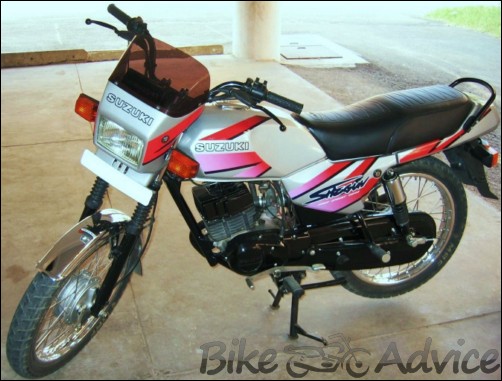
In late 1990 the company posted losses for the first time. Automobile analysts remarked TVS Suzuki’s products lagged behind in performance and fuel efficiency when compared to other companies. A year later there was a company lockout due to labor problems and it got a ‘practically sick company’ image. In 1992, a turnaround strategy was formulated. TVS-Suzuki then introduced five new models surprising everyone – which included Supra, Supra SS, Shogun, Samurai and Shaolin, which was India’s first 5-speed 140cc motorcycle (read user review here).
Aggressive marketing strategies were used and special attention to skill development of managers, sales officers and service engineers was given. Number of Dealership outlets was reduced from 400 to 250. The move worked and the company succeeded in making a turnover of Rs. 4.1 billion and a net profit of Rs 300 million in the year 1994. It was a remarkable recovery. Soon the company rose to sparkling heights and was in close competition with Hero Honda. TVS-Suzuki was now India’s Second Largest two wheeler manufacturing company. However, somewhere in the midst of the turnaround, differences between the two surfaced up.
The Split Between TVS & Suzuki
TVS accused Suzuki of creating roadblocks in the management and also strongly resisted the launch of Samurai and Shogun, both of which proved to be successful models for the company eventually. Moreover Suzuki refused TVS more funds and technology for new models to keep in pace with the competition. “Everything without exception had to be approved by Suzuki” said a TVS spokesman.
“Joint ventures are like long-term friendships. They go through ups and downs. Changes in circumstances and expectations may cause tensions in the joint venture. But if you have a robust working relationship, whatever be the tension, you don’t go and shout from the rooftops. You keep negotiating, fighting internally, hammering it out and finally arrive at something that both can live with.”
…said Mr Venu Srinivasan, Managing Director of TVS-Suzuki, in an interview to Business Line, in 1996, when asked about his experience of working in a joint venture and reports of tension among the partners.
Soon the official version came out in public. It is said that Suzuki’s demands were VETO Rights over aspects of management and in Decision-making process, restrictions on exports, conditions to restrict use of local components, compulsory import of all Dyes and Capital equipments from Suzuki and payment of royalty for an indefinite period.
TVS straightaway resisted all of these demands. The Government decided not to interfere in the issue and soon TVS-Suzuki witnessed huge decline in sales. Meanwhile, the Indian Motorcycle segment shifted to four stroke models and TVS-Suzuki lost out on massive demand.
Kawasaki & Suzuki:
Later, Suzuki expressed desire to increase the equity holding and in August, 2001 they entered an agreement with Kawasaki for Product Development, Design Engineering and Manufacturing. TVS saw this as a direct conflict of interest. And finally in September, 2001 TVS-SUZUKI announced their breakup.
TVS bought the 25.97% stake of Suzuki for Rs 90 million, increasing its stake to 58.43%. The frog-shaped but powerful 150cc Fiero was the last product of TVS-Suzuki. It was a celebration time for other companies as the company without Suzuki’s technical help was not expected to head anywhere and TVS was expected to prove weaker in the years ahead!
Re-Entry of Suzuki
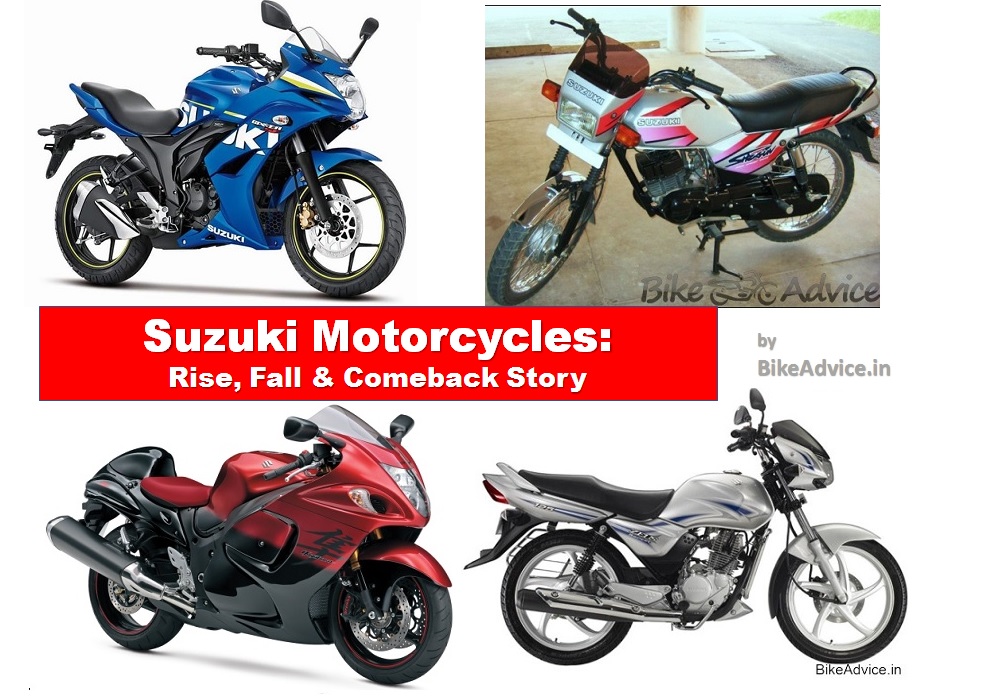
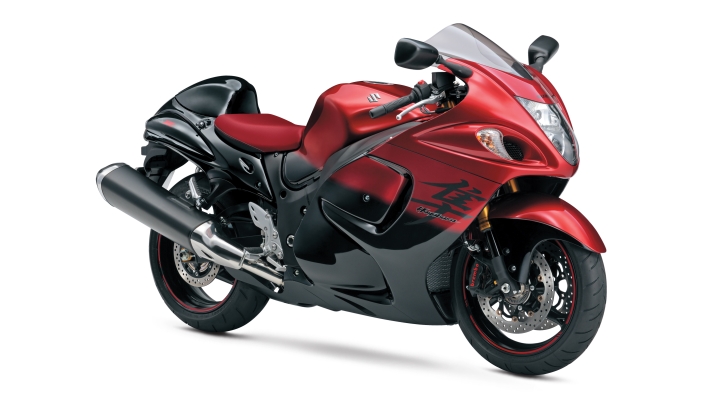
Suzuki Motorcycles abandoned all its operations and left the country only to re-enter India five years later. From there on, they have been on a slow and steady course and are working towards building a good brand image. To enhance their brand recall, they introduced their international range of high-capacity motorcycles including the mothership Hayabusa, Gixxer 1000 and Bandit.
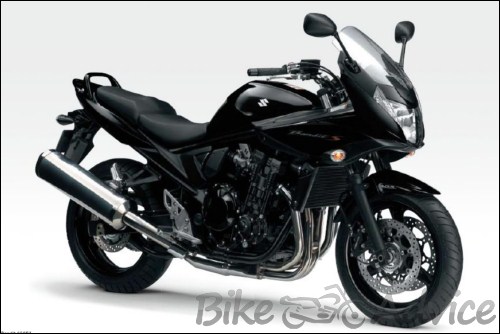
As of 2010, the had seven products in the portfolio. When they started operations solo, they not only had to counter Hero Honda, but Bajaj was a massive motorcycle company at this point and then there was their ex-partner TVS, which was the third largest two-wheeler manufacturer now.
And later on Honda, after their split with Hero also joined the competition and is the most aggressive two-wheeler manufacturer at the moment. As a result of the competition, Suzuki could not really set the same foothold in the country and many accuse them of being negligent towards India in the two-wheeler space.
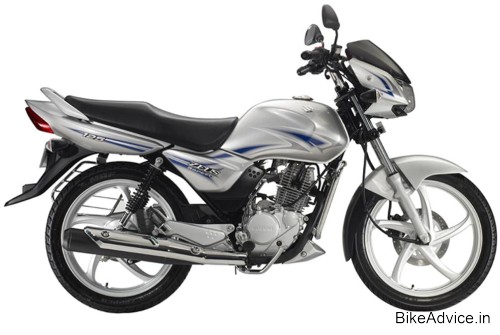
125cc Zeus and Heat were launched which were decent offerings but failed to impress the market. Suzuki tried improvising their product offerings and introduced Hayate in the 110cc and 125cc Slingshot in the commuter segments and the GS150R in the 150cc segment.
Out of these GS150R is out of production whereas the other two continue to stroll around but with marginal sales. However, Suzuki fared well in the scooter segment with their 125cc Access. The big thing lacking in Suzuki’s motorcycles is/was the ‘interest levels’. They did not seem to be interesting to an average buyer…
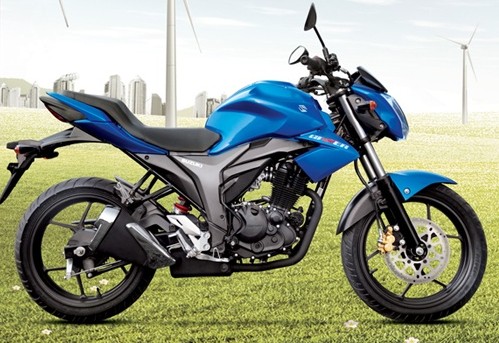
Come September 2014 and Suzuki introduced their new premium 150cc Gixxer which, for the first time, created a wave and in our road tests and shootouts came out as a winner and became a 5000+ per month seller. They followed it up with its faired version Gixxer SF and very recently introduced its fuel injected version. Currently, both these motorcycle siblings are expected to lead Suzuki’s charge and the company appears to have now caught the grip of what India loves.

With annual sales of 3.40 Lakh two-wheelers in Financial year 2015, Suzuki stands as the sixth largest two wheeler manufacturer in India behind almost everyone. Not very successful at moment but they have introduced some very interesting models internationally like the GSX-R150(most powerful sports 150cc), GSX-R250 (very interesting sports 250cc with Inazuma’s relaxed engine) & V-Strom 250 adventure tourer which, if brought to India, can round up their lineup.
No doubt that Suzuki is nowhere near Honda’s aggression but it looks like they are getting confident and things will get more interesting when they start going all guns blazing…