Tips for Riding Motorcycles at Ultra High Speeds

by Deepak on December 8, 2009

I have rarely found a youngster who has not got the passion for speed! Speed is the only need that can lead you in all senses! Here are some of my tips that I have gathered, of course, from my personal experiences. To attain this high speed, you either have to take your Indian Super Bike to its highest performance level or you need to own a Foreign Super Bike. With Indian bikes this becomes a challenge as you have to concentrate on handling the bike judiciously, at the same time concentrating on the roads and traffic flow. But take it from me, it is a fun! BUT there are few things you need to consider before you kick your bike!
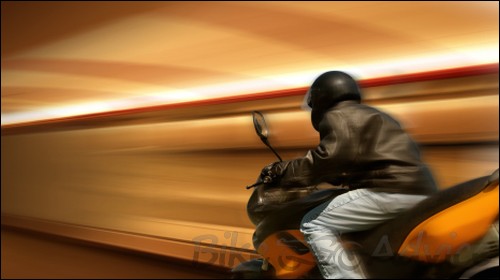
Ultra High Speed Motorcycle

Do you really need to speed up your bike? Speeding up a bike unnecessarily is really a wrong thing. But I would recommend that you practice speed riding in pleasurable conditions, as it may help you in extreme situations where you have no other option than to speed up… After all, one of the purposes of having a bike is ride fast as well… If you are not used to speed biking, then chances are very less that you could drive a bike in a pressured situation safely.

Riding Within Limitations: You should also know the physical limitations of your bike, because the behavior of simple Indian bikes change dramatically when they cross a particular speed! Eg. A Splendour is a very nice bike at low speeds but if you try to push it beyond 70-80 kmph, the engine will start giving out tremendous vibrations which will warn the rider to cool down! I have ridden a Splendour at the top speed of 90 kmph (7.2 bhp version) I have also touched 100 kmph using Hero Honda Dawn which has got a similar engine as the old Splendour, with slightly higher torque. (7.4 bhp). But you certainly feel uncomfortable at these speeds, on these bikes. Tip: whenever you feel that your bike is uncomfortable… Cool down immediately… you never know what it may lead to.

New Bikes: Speeding up even for just a while, may severely damage your bike engine for ever. Especially I would like to tell this to new bike owners. They buy new bikes and start using them at high performance levels. This is not how a new bike is handled.

When the engine is new, the friction between engine parts is also at the maximum. For the initial 1,000 – 1,500 Kms. the bike should be driven at slow speeds. I remember my own 1st Hero Honda bike which was expected to give me average of 60-70 kmpl. But because of my rude riding habits from the 1st day, it still gives me 35-40 kmpl, even after 7 years! Never make this mistake! Tip: Don’t hurry please, if you own a brand new bike.

There are many factors that affect the speed of your bike directly or indirectly.

  • Condition of the road and conditions on the road
  • Condition of your Bike
  • Make of your Bike
  • Rules of Physics
  • State and stability of your mind
  • Luck!

Classifying Speed: By saying Ultra High speed, I am referring to the speeds when the optimum performance of your bike is tested

  • Speeds from 50-70 kmph are normal speeds (for Indian highways for bikes).
  • Speeds from 70-90 kmph are high speeds.
  • Speeds from 90-120 kmph, I’ll call them super high speeds (most of the so-called Indian super bikes do not exceed this speed limit gracefully)
  • Speeds above 120 kmph fall under ultra high speeds.

Road Conditions: Road conditions carries a weightage of more than 50% in your speed riding as you have to drive all the way on the road itself! Unfortunately, we have very few roads in India, which are long, straight, smooth and hassle free enough to have a nice long speedy ride. The best road could have been the express way from Mumbai to Pune, but 2 wheelers are not permitted. :(

Required Conditions: While riding, if following conditions are met, you are free to test your high speed riding skills. Tip: If any one is missing from this list, skip the chance of a high speed ride!

  • Road is too good (even surface and straight)
  • Very less or no traffic
  • Road is not wet (by oil or water)
  • Road is not having sand or mud or cow dung on the surface
  • No potholes/speed breakers
  • Bike is in best condition
  • No pillion rider
  • You are in a good mood!
  • No villages or road crossings in between
  • You are wearing all the safety gear!

Now here you go! Gear your bike down to lower gears. Try to attain the maximum speed of every single gear. E.g. On 1st gear itself, reach 30-40 kmph, 2nd gear 60 kmph, and so on. This will help your bike attain ultra high speed easily.

Tips:

  • Your mind should be stable with no other thoughts other than Speed.
  • Reach the highest concentration level ever.
  • If anything seems going wrong first thing you need to do is press the clutch, this will cut the power to the rear wheel.
  • Slow down judiciously seeing that the bike doesn’t skid. Keep your bike in a straight line whenever you apply the brakes.
  • It’s ok if you leave the road and enter the shoulder this process. Better than going under a lorry!

Avoiding a Crash: There are two ways of avoiding a potential crash – Fly or Fight. Fly method tells you to break down the speed rapidly and come out of the scene or stop the motion totally. Fight mechanism tells you to increase the speed and escape ahead of the scene.

Fight mechanism is easier to handle. Using brakes properly is a skill, and you are also unaware of things moving behind you. So as far as possible, go for speeding up ahead.
Use half clutch technique that theoretically doubles your engine speed and practically too, adds torque, which helps you escape.

Half Clutch Technique: While the throttle is open, half press the clutch and release it instantaneously, this will disengage the drive for some time. The engine having no load, will start moving at a higher rate, at the same time releasing the clutch will engage it with the engine drive that is having higher number of rotations! This will definitely give a jerk to your bike. But frequent use of this technique will result in to enormous wear and tear of your clutch plates and also it may affect engine efficiency. So use this technique only as a life saver tip. Not every day! Tips:

  • Be prepared to control direction of your bike when using half clutch technique as chances are there that you may lose control over bike after the torque kicks in.
  • Try to visualize the whole scene from a bird’s eye view and decide your escape point, take it from me, it works!
  • No other thoughts! 1 thought = 1 accident!
  • Sit in an inclined position it will help keep the CG (Centre of Gravity) of your bike at a lower level…
  • Hold the handle bar real steady and straight if your bike enters a rough road accidentally.
  • Obey rules of physics on turns and on low friction surfaces (wet, muddy or sandy)
  • Don’t ride the bike at ultra high speeds for more than 5 minutes at a time.
  • At ultra high speeds, your relative weight with the bike approaches zero, so even a small wind can blow you out of your way, so beware of that! (Even trucks generate strong winds on the highway)
  • At ultra high speeds, never apply the brakes when behind a vehicle, just try to overtake it. This is because, drum brakes or disk brakes, except with ABS, cannot overcome the force that the vehicle experiences because of sheer inertia at those speeds.
  • At these high speeds, even a small insect will hit your body as if it’s a bullet, so see that no part of your body is exposed.
  • Keep all your muscles very tight all the time, this will help if some obstacles like potholes or uneven road surfaces, comes on your way. Keeping your hands tight will give you better control.

Interesting fact: When you travel at a speed of 60 kmph, your body travels at a rate of 80 feet per second! So imagine, if you fall off a bike at a speed of 60 kmph , you will be rubbed on the hard tar road surface for 80 feet in a second! Always keep this math in your head and then drive judiciously and safely!

I own a Custom chopper that weighs 275 Kg! I have attained a speed of 140-150 kmph several times on it! I have never ever had a single accident at high speeds as I have always obeyed all the above tips or Laws of Speed Riding strictly. After all we are doing high speed riding for our joy, so we must make sure that we bring only JOY out of it! So just keep all these things in mind and Kick your Bike! Happy Speeding!

Thanks and regards,
Prashant Kulkarni

P.S. Remember that You are 100% responsible for your safety!
Get Free BikeAdvice Buyer's Guide...
Riding Tips, Fuel Efficiency Tips, Info about all Indian Bikes all in 1 amazing ebook. Free!
We hate spam just as much as you

Like & Comment Via Facebook...

{ 17 comments… read them below or add one }

Joe December 8, 2009 at 12:45 pm

Really really helpful tips…!! :)

Excellent work Prashant.. Cheers..!!! :)

Reply

Mangesh December 8, 2009 at 5:09 pm

Great information i tried Max Speed of 80 kmph on My Bajaj Saffire but surely after reading this I’ll take care.
Thanks a Lot

Reply

BikeBhp.com December 8, 2009 at 8:04 pm

Hi Prashant,

You have quoted “If anything seems going wrong first thing you need to do is press the clutch, this will cut the power to the rear wheel.”
My question to you is don’t you think this will release our control too from the bike? since the engaged engine gives more control to the bike as it acts as a breaking mechanism, which can be easily understood by the example of declining from a steep it is never advisable to press your clutch.Yes all you can do is release your accelerator first.

Please explain.

Reply

Naorem Singh August 19, 2011 at 3:39 am

Hi Fellows,

There’s no ultimate truth. Take it with a pinch of salt.

Let’s consider a few scenarios without using braking mechanism itself but just pressing the clutch: a) slow speed, b) high speed, c) downhill and d) uphill. By doing so, in some cases you lose speed & in some cases you gain speed. Choose the method that losses speed the most and add you braking – it should bring the bike under control at shortest diatance.

Reply

raghav December 9, 2009 at 12:55 am

nyc, i knw mst of d tips givn here bt i got to learn smthngs here .
speed thrills me to d core .
rtr 180 n p220 are d bst bikes in india to speed around .

Reply

Ashish December 9, 2009 at 9:28 am

Don’t ever engage clutch when you have to brake suddenly. Let go of the accelerator and use both the hand and foot brakes progressively along with the engine braking. Using clutch effectively stops you from using the engine braking, causing your stopping distance to increase.

I think the writers should double check the information they provide before publishing. At least, the readers should definitely double check with other sources before applying the techniques.

Reply

Nishant December 9, 2009 at 10:46 am

Mind blowwwing article man….!! One of the best article….great work…!

Reply

Sayak December 9, 2009 at 11:51 am

Thank u Prashant Gi, for such a nice article. It is a good tutorial…very good indeed.

I own a Yamaha YZF R15…& i have taken it to 133 kmph (speedo reading, actual speed might be a few kms less)…& surprisingly I followed all ur ‘Tips’ (those 5 points) though I hardly knew ’bout them when I ‘flew’…

And there’s also a question regarding engaging the clutch while braking…what I always do, before engaging brakes, I engage the clutch…so that the engine gets cut off…& I always do that…Clutch > Rear Discs > Front Discs…synchronized…

But after going though Ashish Gi’s comment…I’m in a bit of doubt…should I NOT do that…should I stop engaging clutch while braking ???

Please advise…

Thanks & Regards

Sayak…

Reply

Ramgopal December 9, 2009 at 8:29 pm

hi
pretty new tip. but same question like prashant had asked.. when at high speeds catching clutch will gradually give a feeling that the bike is going fast and that feeling only will kill ur senses……

i have a passion plus and i have taken it to 80′s and have been in similar tight situations and have closed the throttle and then using the back brake clutch and then front… this brings the bike to a gradually steady stop or slowing down….

i m not criticizing you tips but i feel catching clutch at high speeds is like goin more faster ………. so silent all of a sudden…..

otherwise nice tips to remember and not screw up the new engine and the biker on top of it……
keep up the gud works………..

Reply

fas December 10, 2009 at 12:00 am

Basically practise and experience counts before you wrip the throttle.

Reply

Srinivas January 11, 2010 at 1:44 am

Hi…. Frndz….

Good work by Prashanth..

But i think there are some things to change….

1st of all….

Splendor Cant touch 90… and Dawn may will touch 100 only in dreams… this is truly a fake… i can bet for it…… may be he is saying in down roads or hilly roads i think…..

2 nd one is in “FIGHT” mode.. Half clutch can gives u a feeling of bit jerky speed but cant help….

By my riding Experience… to help in that situation… in my own language i can give u a good advice that is “SUDDEN GEAR DOWNING”…

To explain it… for example i have came across many situations as above… Im having pulsar 150…. to cross upcoming vehicles while overtaking other vehicles if u are in 5th gear half clutch tech cant help… so….

IN THAT TENSION SITUATION INSTANEOUSLY GEAR DOWN TO 4 AND GIVE THROTTLE ABRUPTLY WHICH MAKES THE BIKE TO RASH LIKE A ROCKET.. THIS IS TRUE IF U ARE EXPERIENCED U CAN DOWN TO A LOWER GEAR ALSO(3)….

HI… Sayak…. for ur advice i agree with ASHISH advice…

In my words use Clutch only for changing of gears And only in cowded traffic.. also more often use of clutch consumes more fuel while short term braking…..

but the review was nice…

Post ur comment…

Reply

Mack January 19, 2010 at 4:23 pm

HI frns,

Got many more tips to remember from all you guys. I agree with srinivas’s tip in the situation fly or fight situation. It really works…even i own a pulsar 150…it takes you at a rocket speed…i have experienced it in on both 3rd and 4th gear…it works….

One more issue i would like to share with you all is…In pulsar new edtion (digital)the wearing out of the rear wheel is in abnormal manner. I considered the road structures in india and tried to analysed but still away from any conclusion.

If you observe carefully (will have to touch the wheel base) you will find that the right side of the tyre wores out faster as compared to left side making the tyre surface uneven. It is risky to ride a bike in monsoon with such tyre conditions. I have checked this with all the pulsar standing in my office parking, found the same wear of pattern…

Neither Bajaj nor MRF is ready to address the issue so finally we have to think of our safety.

I request you all to help me to find a conclusion like what is the exact cause of this uneven wear out.

Above all…

Pulsar 150 is an amazing machine to ride on.

Thanks prashanth and frns for sharing the valueable tips..

—-$$Mack$$—-

Reply

Srinivas January 23, 2010 at 12:33 am

Hi,….. Mack….

I think u r talking about Digital models…. Right…???

As the Pulsar models r upgrading… the quality of the vehicle is getting worser…. Its true…. Its not only my own opinion but the opinion of the authorised mechanics….

The new models r having different thread pattern of MRF tyres…… I have observed them…

My model (2006) and lower models are having Good MRF Zapper tyres..

You believe r not….. my tyre(back) has some whtat worn out..
Even though i want to intentionally skid the tyre by rising throttle or at high speed braking the tyre was holding the road and was having good road grip… Thats true…. for our models…
Ive tried a lot at speeds of 90 and so….

Newer models thread pattern was different and i think it lacks the quality……

Those who new the quality are still going for our tyre pattern… recently my frnd got 2009 version bike and asked to fit our thread pattern MRF Zapper tyres by replacing the newer thread pattern one in showroom itself…..

So My Humble request for all Pulsar lovers was to go for older model Thread pattern MRF zapper tyres i.e 2005 or 06 model……

I think its Purely a Quality issue Mac……

Post ur comment….

Reply

Praveen January 26, 2010 at 11:24 am

Hi.,Mack
I agree with u on that “SUDDEN GEAR DOWNING” thing..
i have used many bikes & now having a bajaj discover 135 DTS-i & ct 100 ..mostly i overtake with a low gear which gaves me more power on wheels and make next gear to deliver quick acceleration..

But, a biker should know when to shift down to lower gear…
1.He is in low speed with high gear.(Ex:50kmph at 4th or 5th gear)
2.Need sudden pickup or acceleration.
3.To overtake as quick as possible..

the rider should keep 1 thing in mind ” NEVER SHIFT TO LOWER GEAR WHEN U ALREADY AT TOP SPEED OF THAT GEAR” this will cause to lock the rear wheel,damage clutch plates & mostly leeds to accident…
————————————————————–
Thank you MR.Prashant Kulkarni for such a nice tips..
————————————————————–

Reply

Philip January 26, 2010 at 2:55 pm

I have around 25 years experience in bikes. both on speed and normal driving in India and abroad.

On an unrgent brake situation, you should NEVER press the clutch as the first step.

1. the rear brake

2. slow downs with the power of brake and engine.

3. then the front brakes.

4. lastly the clutch just before stopping.

Reply

Ban K February 10, 2010 at 9:46 pm

Don’t press the clutch!!!!

This is never advised for anyone, especially at high speeds. Depressing the clutch will disengage the engine from the rear wheels, but it will also mean sudden free inertia with only your brakes as a stopping force. The engine itself acts like a braking mechanism. You just have to release the throttle. To us guys who live in the hills of India(Shillong), pulling the clutch suddenly will in the next few seconds land you down the bottom of a 100 foot gorge wondering what happened (near misses a few times so I speak from exp.

Good riding!

Reply

Akshay May 4, 2011 at 7:04 pm

I have riden my hero honda at 95km/hr

Reply

Leave a Comment

Previous post:

Next post: